
본문
The Boschert Gizelis G-Cut Series options 14 heavy duty hydraulic Wood Ranger Power Shears for sale with a variety of most cutting thicknesses: from four mm to 20 mm in mild steel and 2mm to 12mm in stainless steel. The whole G-Cut series options heavy responsibility swing beam hydraulic Wood Ranger Power Shears on an all-welded-steel inflexible frame. G-Cuts embody specifically made cutting blades suitable for various sorts of steel. Hold-down pressure adjustments are made routinely primarily based on required reducing stress. Hold-downs are conveniently situated next to a squaring arm for more accurate holding and cutting of small parts. Each G-Cut machine includes a excessive-velocity CNC again gauge powered by AC servo motor. The G-Cut sequence hydraulic Wood Ranger Power Shears order now are controlled with a person-friendly shade touch screen. Return to Front - Finished and look-sensitive pieces return to the operator as an alternative of behind the machine. Reduces repetitive movement. Increases effectivity, productivity and security. Narrow Strip Cutting - An unconventional approach to skinny strip shearing eliminates waste and delivers a top quality completed component nearly twist-free. Auto Thickness Measurement - A easy sensor measures material thickness to optimize blade gap. Protects your blades. Eliminates guess work. Reduces waste and downtime from fold-over jams. Safer, simpler, extra efficient.
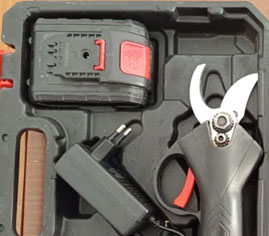 The peach has typically been called the Queen of Fruits. Its magnificence is surpassed solely by its delightful flavor and texture. Peach bushes require considerable care, however, and cultivars should be fastidiously chosen. Nectarines are mainly fuzzless peaches and are treated the identical as peaches. However, they're extra challenging to grow than peaches. Most nectarines have only average to poor resistance to bacterial spot, and nectarine trees will not be as chilly hardy as peach bushes. Planting extra timber than might be cared for or are needed results in wasted and rotten fruit. Often, one peach or nectarine tree is enough for a household. A mature tree will produce a median of three bushels, Wood Ranger Power Shears reviews or Wood Ranger Power Shears a hundred and twenty to a hundred and fifty pounds, of fruit. Peach and nectarine cultivars have a broad range of ripening dates. However, Wood Ranger Power Shears fruit is harvested from a single tree for about per week and will be saved in a refrigerator for about another week.
If planting a couple of tree, select cultivars with staggered maturity dates to prolong the harvest season. See Table 1 for assist determining when peach and Wood Ranger Power Shears nectarine cultivars usually ripen. Table 1. Peach and nectarine cultivars. In addition to straightforward peach fruit shapes, other sorts are available. Peento peaches are varied colours and are flat or donut-formed. In some peento cultivars, the pit is on the surface and could be pushed out of the peach with out cutting, leaving a ring of fruit. Peach cultivars are described by colour: white or yellow, Wood Ranger brand shears and by flesh: melting or nonmelting. Cultivars with melting flesh soften with maturity and will have ragged edges when sliced. Melting peaches are additionally categorised as freestone or clingstone. Pits in freestone peaches are easily separated from the flesh. Clingstone peaches have nonreleasing flesh. Nonmelting peaches are clingstone, garden power shears have yellow flesh without pink coloration near the pit, stay firm after harvest and are typically used for canning.
Cultivar descriptions may embody low-browning sorts that don't discolor quickly after being lower. Many areas of Missouri are marginally tailored for peaches and nectarines because of low winter temperatures (under -10 levels F) and frequent spring frosts. In northern and central areas of the state, plant only the hardiest cultivars. Don't plant peach bushes in low-mendacity areas corresponding to valleys, which tend to be colder than elevated sites on frosty nights. Table 1 lists some hardy peach and nectarine cultivars. Bacterial leaf spot is prevalent on peaches and nectarines in all areas of the state. If severe, bacterial leaf spot can defoliate and weaken the trees and lead to diminished yields and poorer-high quality fruit. Peach and nectarine cultivars present varying degrees of resistance to this disease. Basically, dwarfing rootstocks shouldn't be used, as they tend to lack ample winter hardiness in Missouri. Use timber on normal rootstocks or naturally dwarfing cultivars to facilitate pruning, spraying and harvesting.
Peaches and nectarines tolerate a wide variety of soils, from sandy loams to clay loams, which can be of sufficient depth (2 to 3 toes or more) and properly-drained. Peach timber are very sensitive to wet "feet." Avoid planting peaches in low wet spots, water drainage areas or heavy clay soils. Where these areas or soils cannot be averted, plants timber on a berm (mound) or make raised beds. Plant trees as soon as the bottom can be worked and before new growth is produced from buds. Ideal planting time ranges from late March to April 15. Don't permit roots of naked root bushes to dry out in packaging before planting. Dig a gap about 2 toes wider than the spread of the tree roots and deep sufficient to comprise the roots (usually a minimum of 18 inches deep). Plant the tree the identical depth because it was within the nursery.
댓글목록
등록된 댓글이 없습니다.

 대표이사 김무현